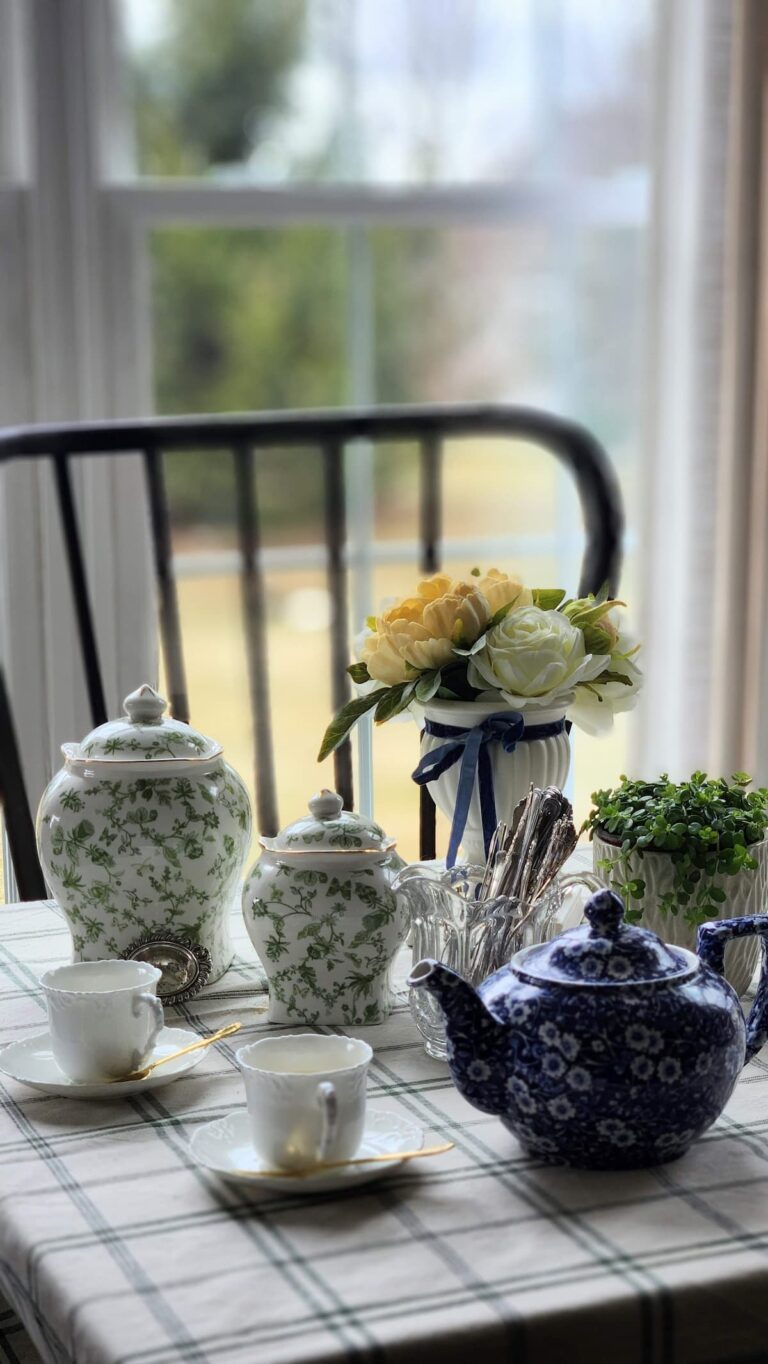
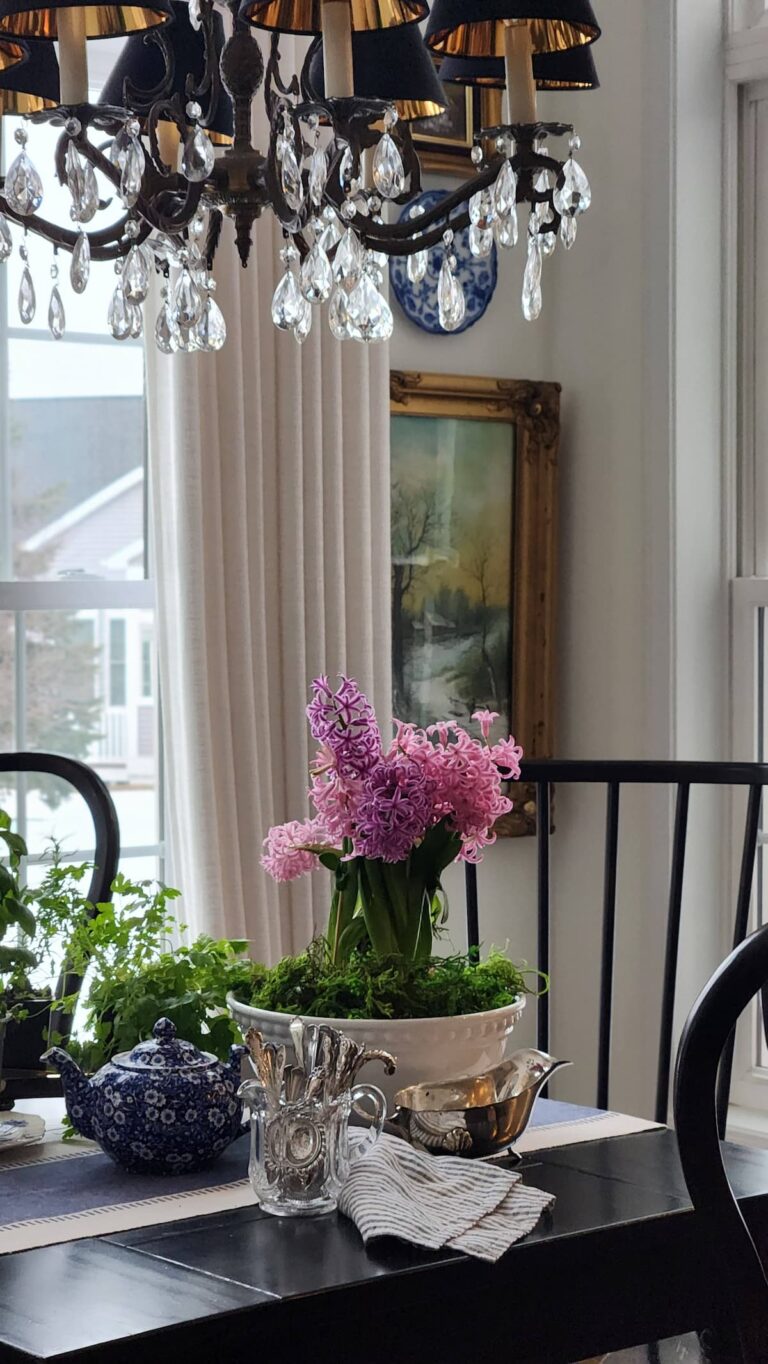
What to Do With Mismatched Dishes — And Why I Absolutely Love Them
Can we just pull up a chair and talk about mismatched dishes for a minute? Because I have a lot of feelings about this topic — and a lot of dishes. I’m not talking about a casual “oops, I lost a plate” situation. I’m talking about what to do with mismatched dishes when you love them the way I do — intentionally, deeply, collected-over-a-lifetime. And I do mean a lifetime — because this story starts long before I was setting my own table.
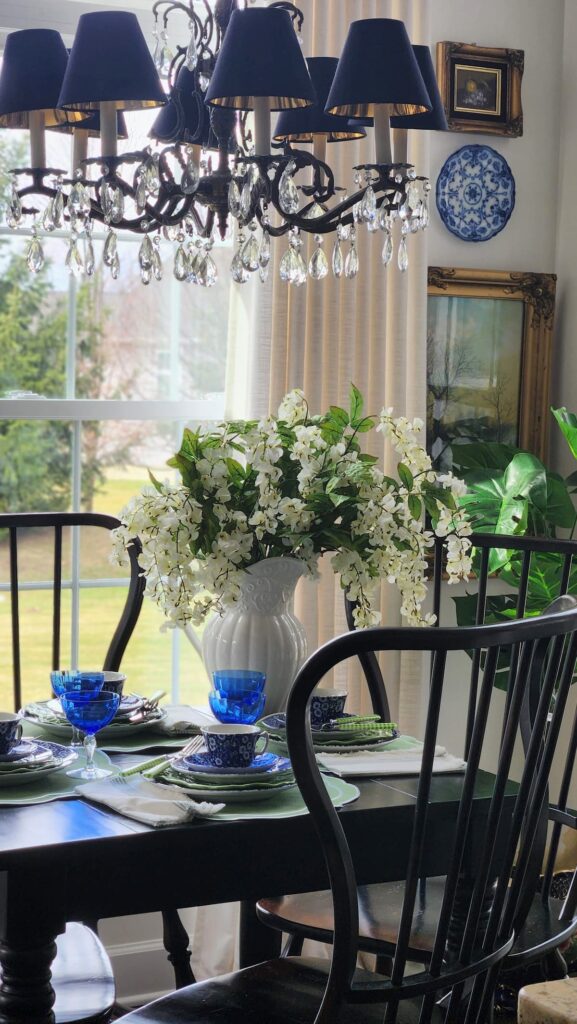
It All Started With a Baby Blue Chevy and a Little Antique Shop
When I was about ten years old, my mother used to pile me into her baby blue Chevy station wagon and off we’d go to her favorite antique shop — Mr. Sanders. I can still picture it. The smell of old things, the light coming through dusty windows, the feeling that something wonderful might be tucked around every corner. My mother knew exactly what she was looking for. And somewhere in those aisles, surrounded by beautiful plates and vintage china stacked on old wooden shelves — I caught the bug too. That’s where my love of collecting dishes truly began. At ten years old, in Mr. Sanders’ shop, with my mother.
Years later, I was eighteen, living in New York City and attending ballet school at ABT — on my own for the first time in that big, beautiful, overwhelming city — and I found my way to a sale and walked out with an armful of the most gorgeous, beautiful plates I’d ever seen. I didn’t have a table to set. I barely had a kitchen in my lovely, but small apartment. But something about those dishes felt like home. Like something my mother had already taught me to love.
Perfectly Collected — and Proud of It
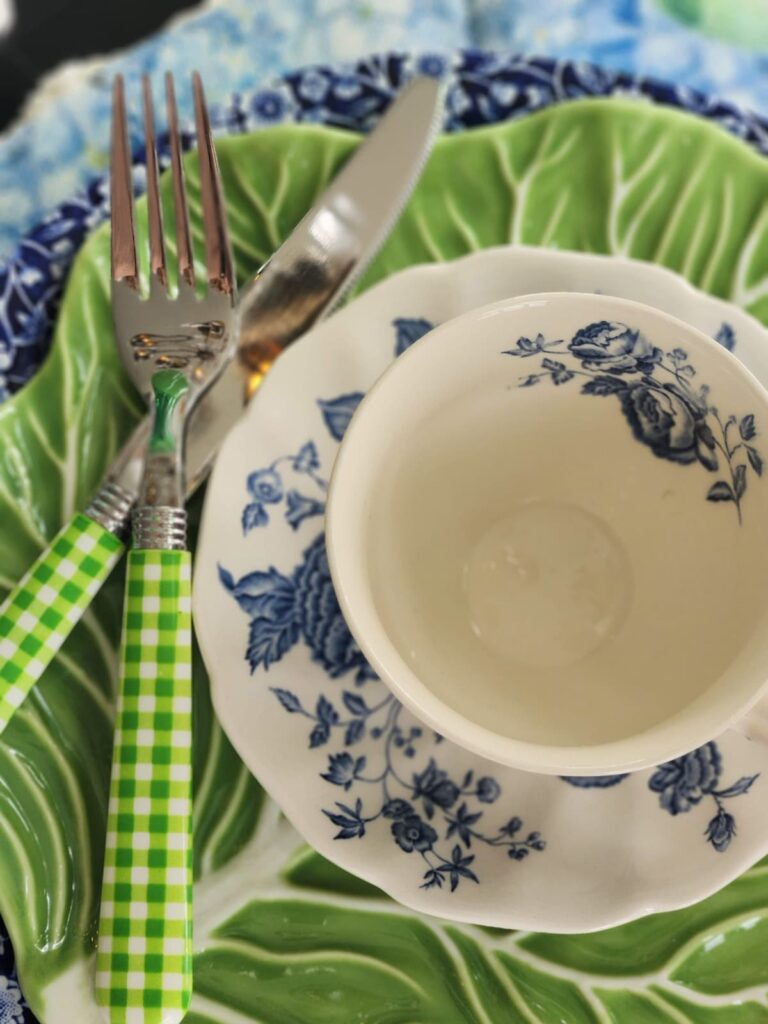
Now I have many full sets of dishes — but as I’ve collected through the years, I’ve also gathered sets ranging from four dishes to six and eight. Some people might call that incomplete. I call it perfectly collected. And I wouldn’t trade my layered, mismatched table setting for anything in the world. Here’s why — and more importantly, here’s exactly how to make it work beautifully in your own home.
Why a Mismatched Table Is Actually Better
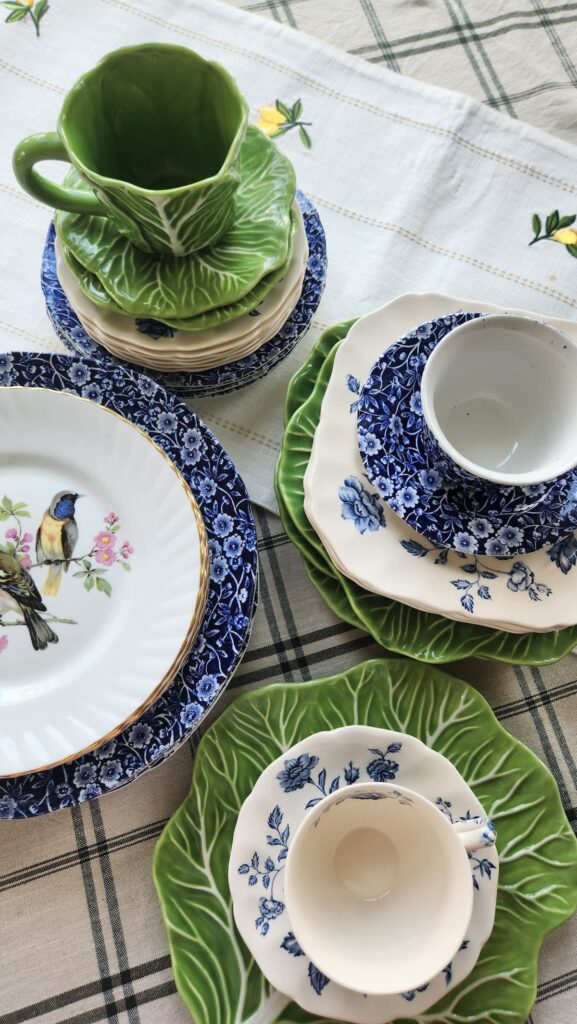
Somewhere along the way, we got the idea that a proper place setting meant everything had to match — the dinner plate, the dessert plates, the salad plates, all perfectly uniform. Magazines like Better Homes & Gardens showed us those pristine, coordinated tablescapes, and we thought that’s the standard.
Friend, I’m here to gently push back on that.
- They tell a story. Every piece has history — a thrifted find, a grandmother’s vintage china, a beautiful pattern you spotted at an antique market and couldn’t leave behind.
- No discontinued pattern anxiety. One cracked plate from a matching set is a crisis. One cracked plate from your collected mix? That’s just Tuesday.
- They photograph beautifully. Variation creates visual interest — it’s why your mismatched table always looks more alive than the catalog version.
- They feel personal. Because they are personal.
- They’re budget-friendly, endlessly expandable, and honestly? More fun to collect.
The Rules for Making a Mismatched Table Setting Work
(There aren’t many — but these make a real difference.)
1. Pick a color scheme and stick to it.
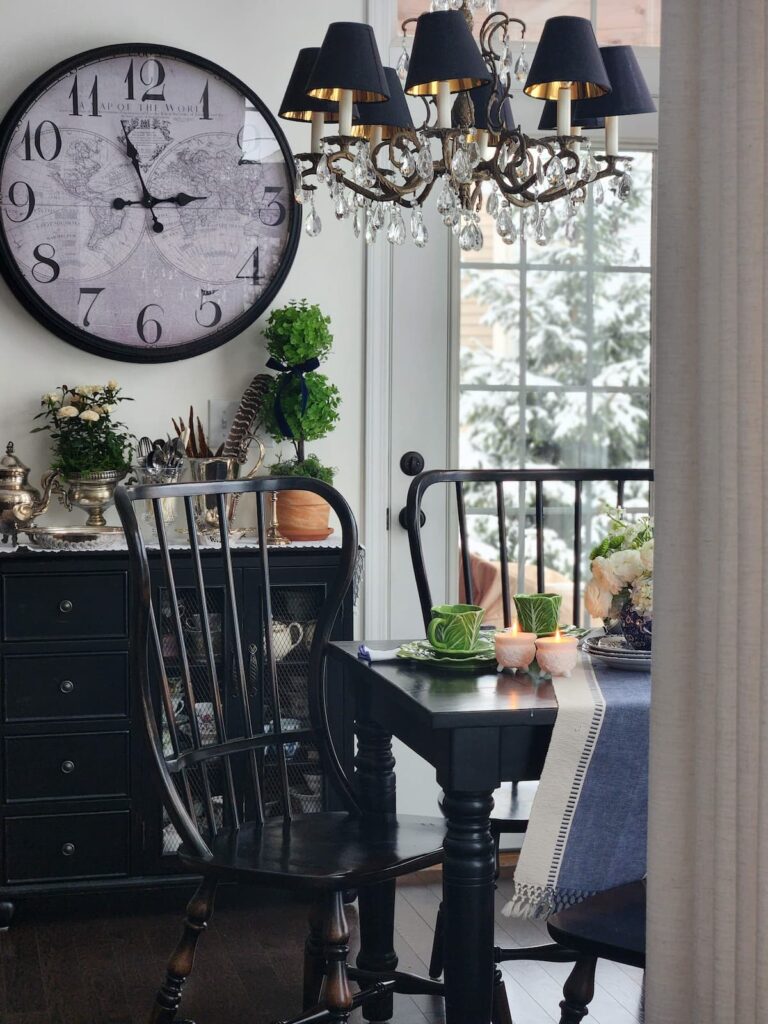
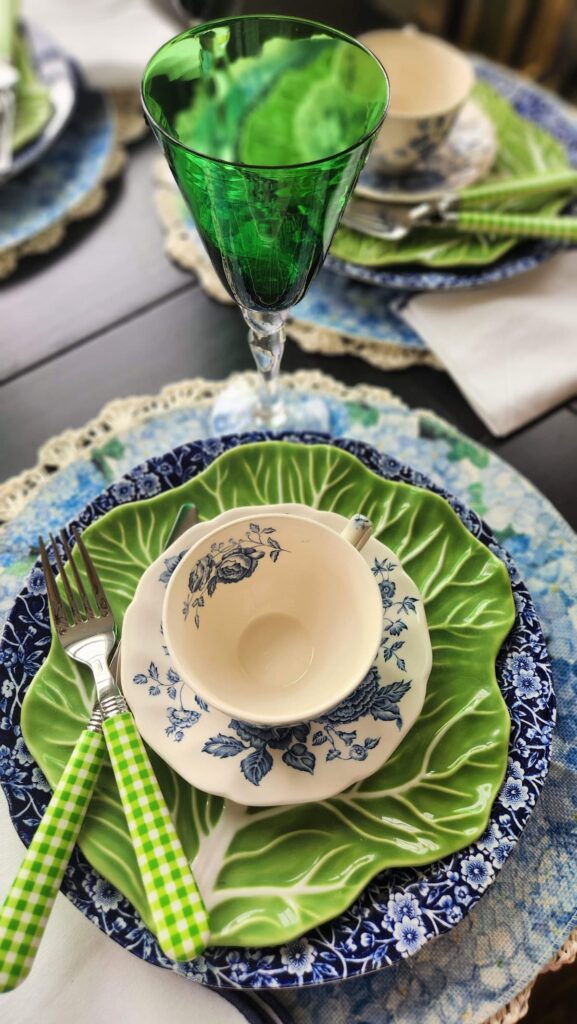
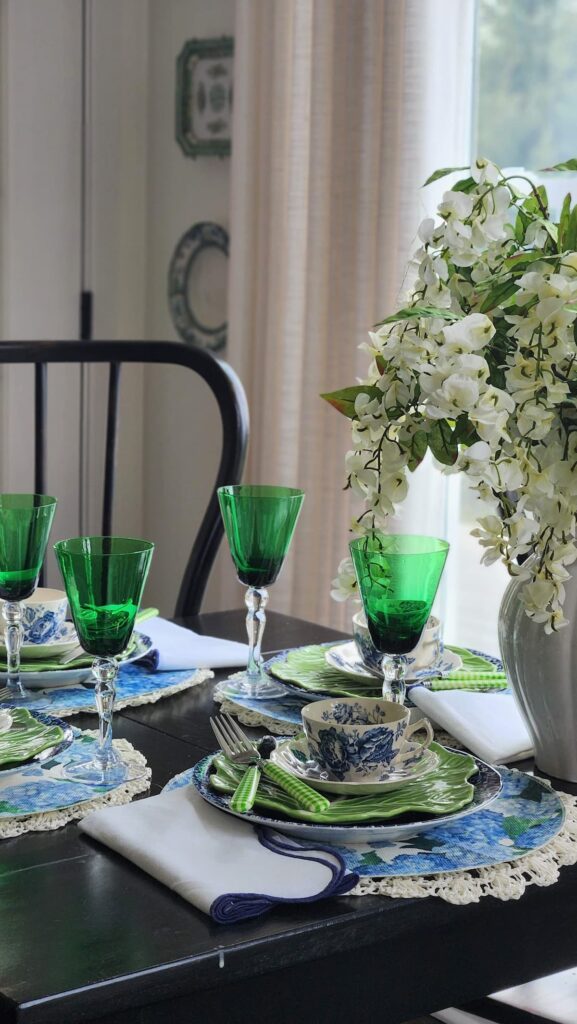
This is your most important rule. All white dishes and cream tones. All vintage florals in soft blues. All earthy terracottas. You don’t need your pieces to match — you need them to live in similar tones. A cohesive color scheme is what separates “collected and intentional” from “I grabbed whatever was in the cabinet.” Mine is often blues, greens and whites, which is exactly why my cabbageware anchors every single table.
2. Vary the beautiful pattern, not the palette.
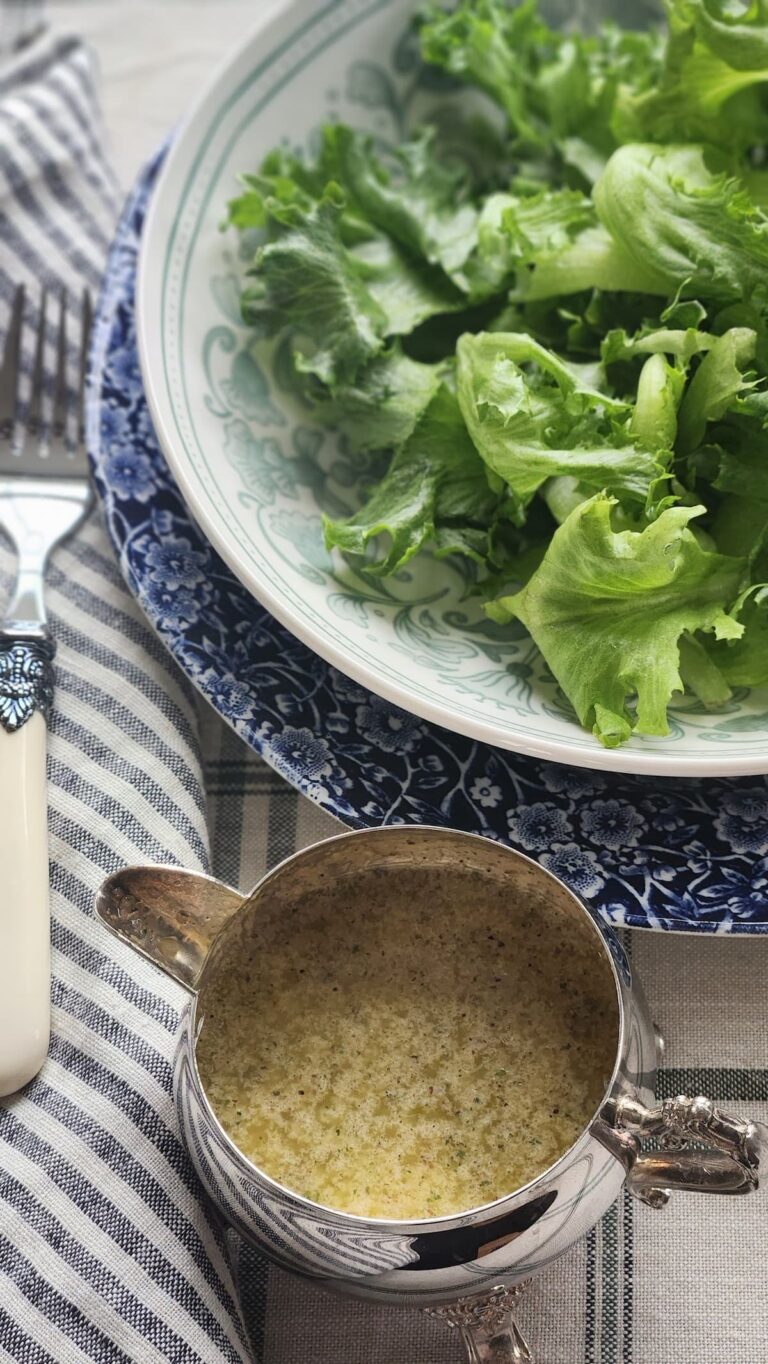
Mix your prints freely — toile, florals, stripes, solids — but keep the colors in the same family. A blue toile with a blue floral with blue transferware? Absolutely stunning chaos. The most beautiful kind.
3. Let one piece anchor your table setting.
A statement platter. A large vintage serving bowl. One piece that holds the whole table together and lets everything else play off it. For me, it’s almost always my cabbageware — bold enough to anchor, beautiful enough to carry the whole look.
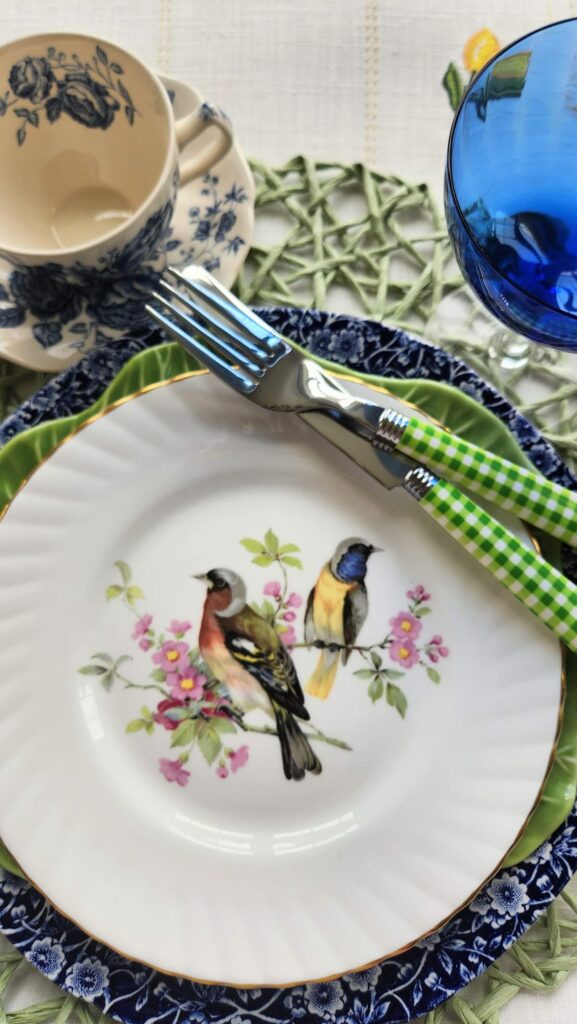
4. Mix your textures intentionally.
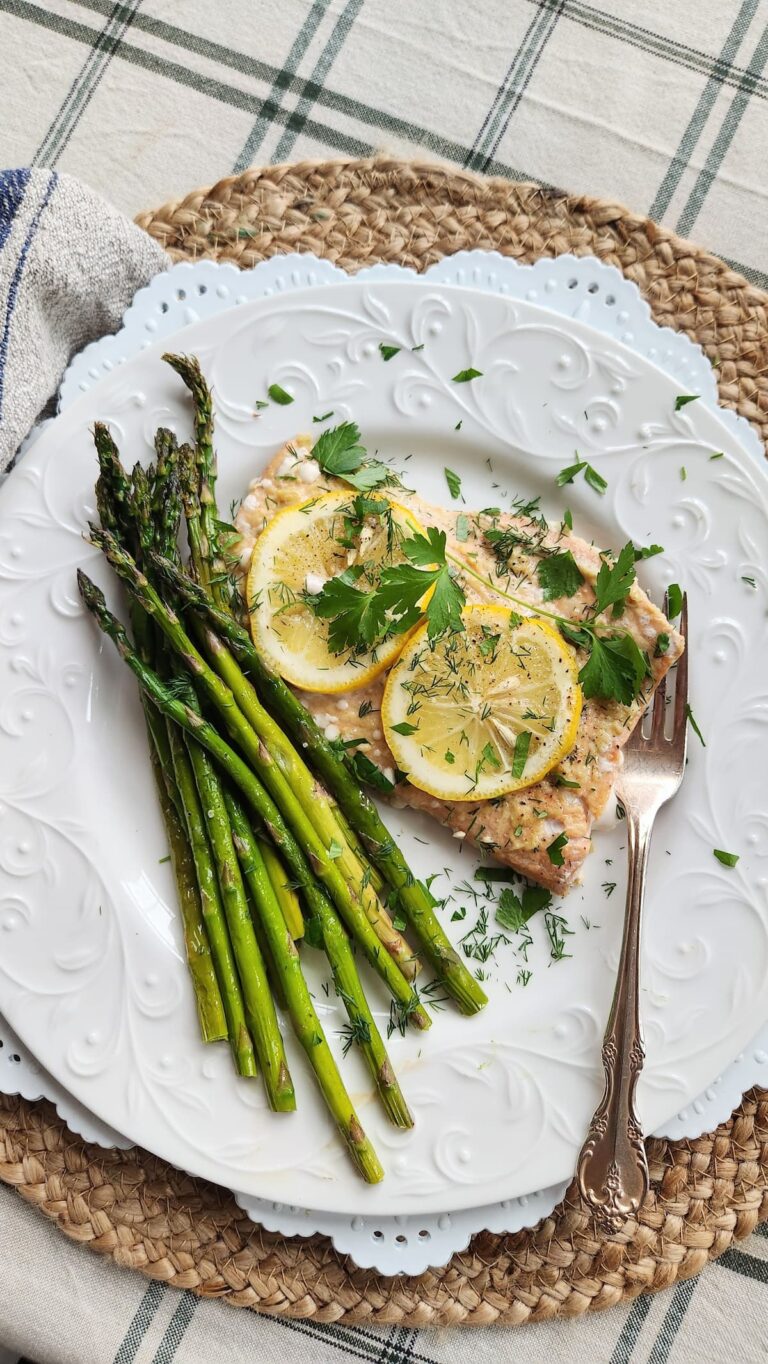
Matte with glossy. Smooth with embossed. White dishes layered under a patterned dinner plate. The contrast is what gives a collected table its depth and that effortless, lived-in richness.
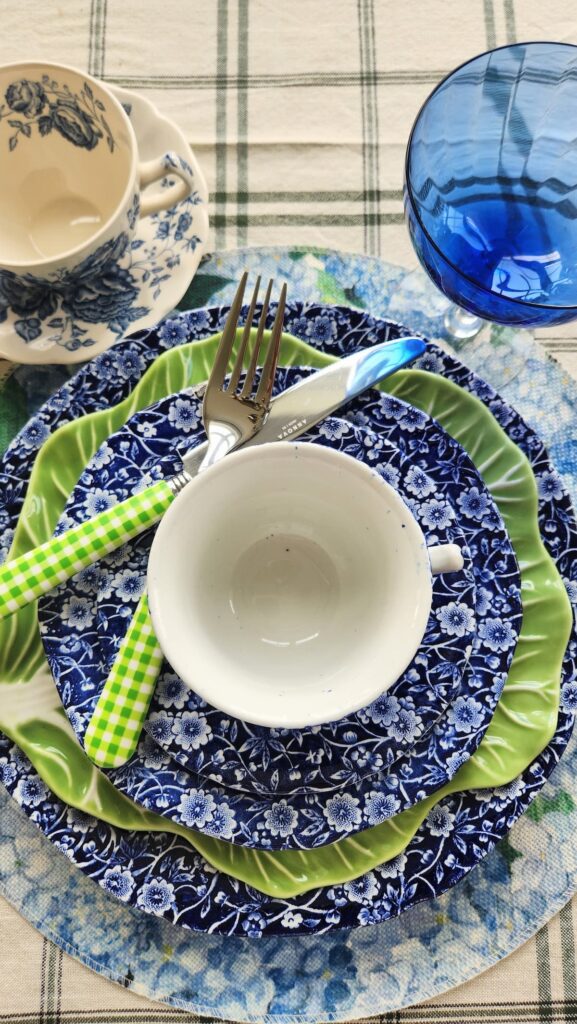
5. Don’t overthink it.
The charm is in the imperfection. If you love it, it belongs at your table.
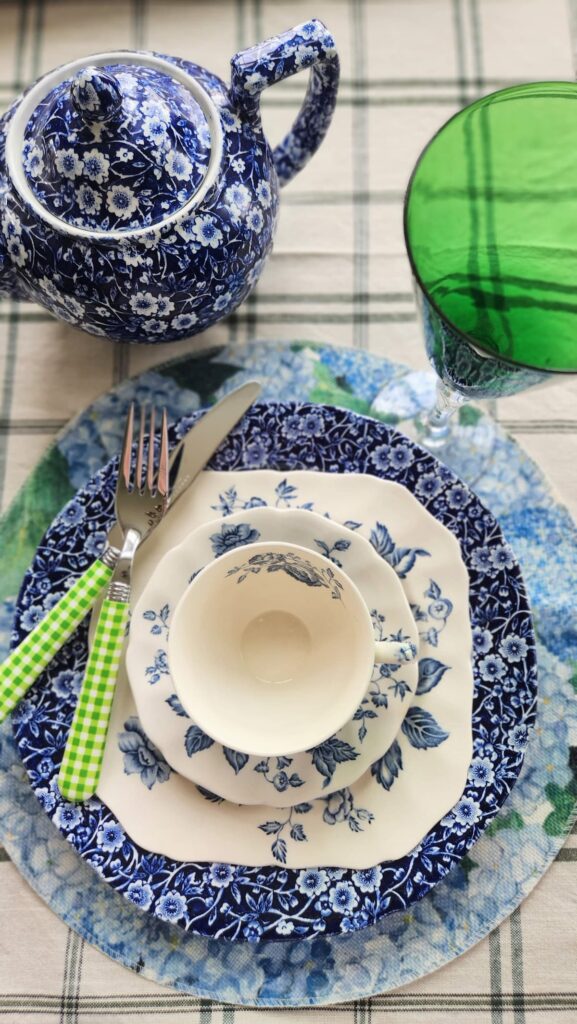
How to Build a Mismatched Tablescape — Step by Step
Step 1: Start with your cloth placemats or tablecloth.
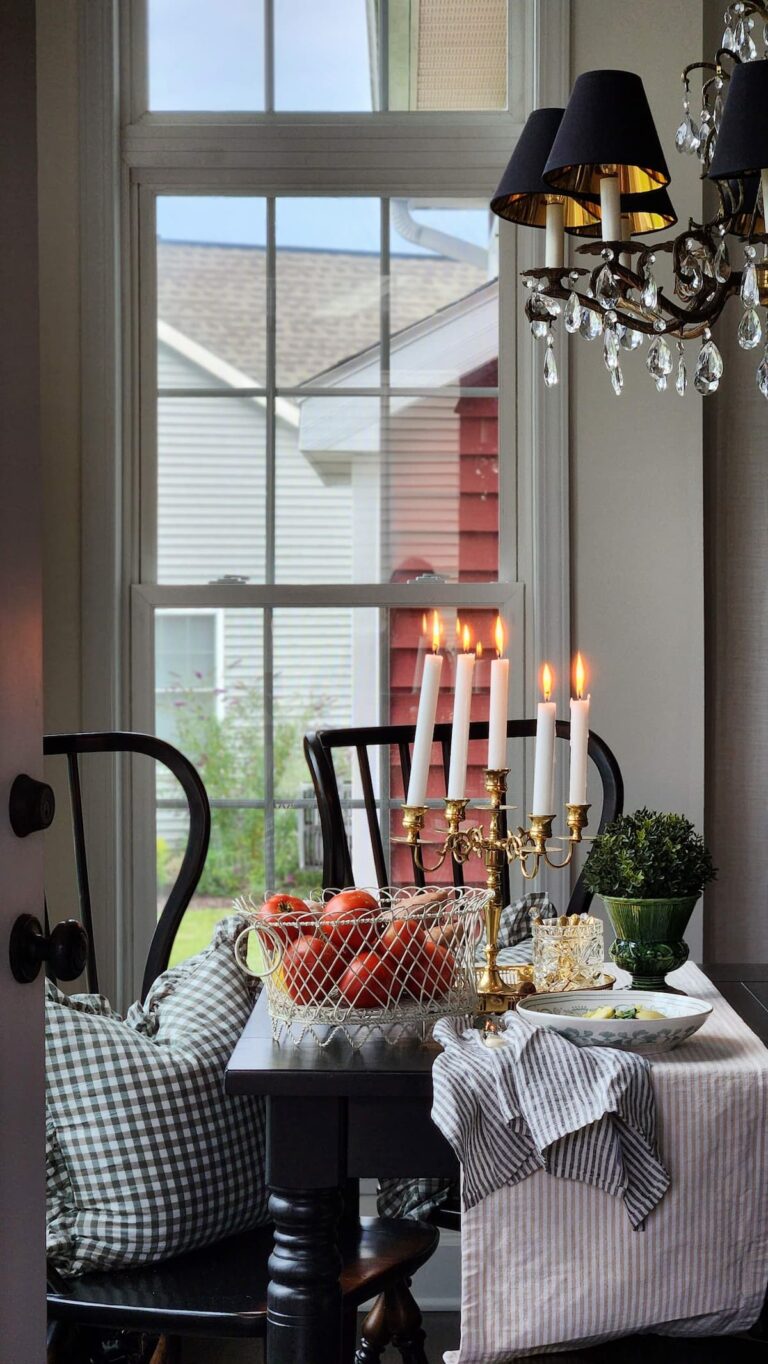
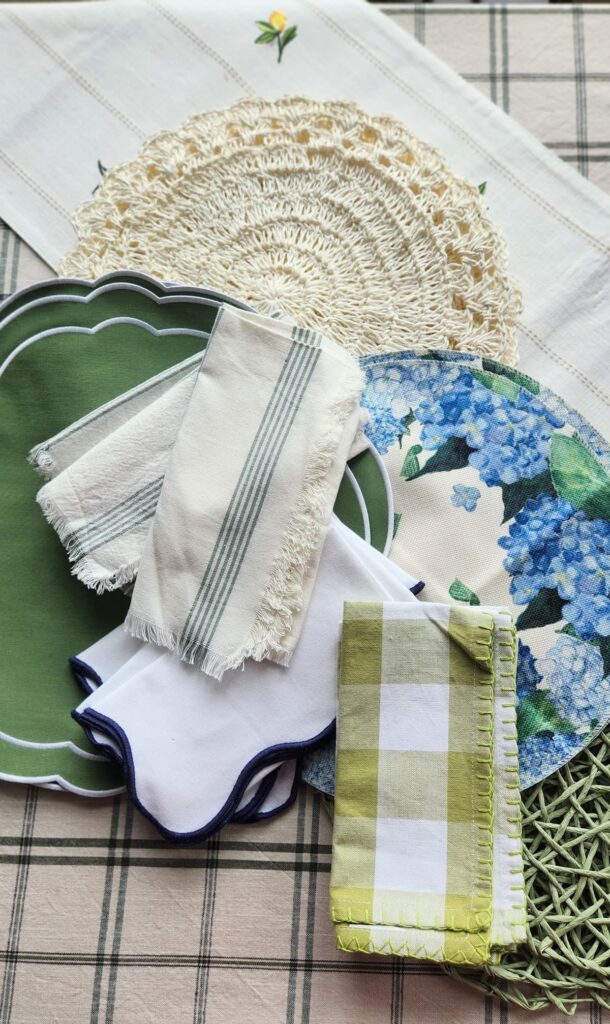
This is your neutral foundation. A simple linen place mat, a soft striped cloth runner — something quiet that lets the dishes do the talking. I prefer cloth placemats over paper any day of the week. They add texture, they wash beautifully, and they signal this table was set with intention.
Step 2: Place your anchor piece first.
Set your most statement-making piece at the center of the table — a platter, a large bowl, a cake stand. Everything else builds around this.
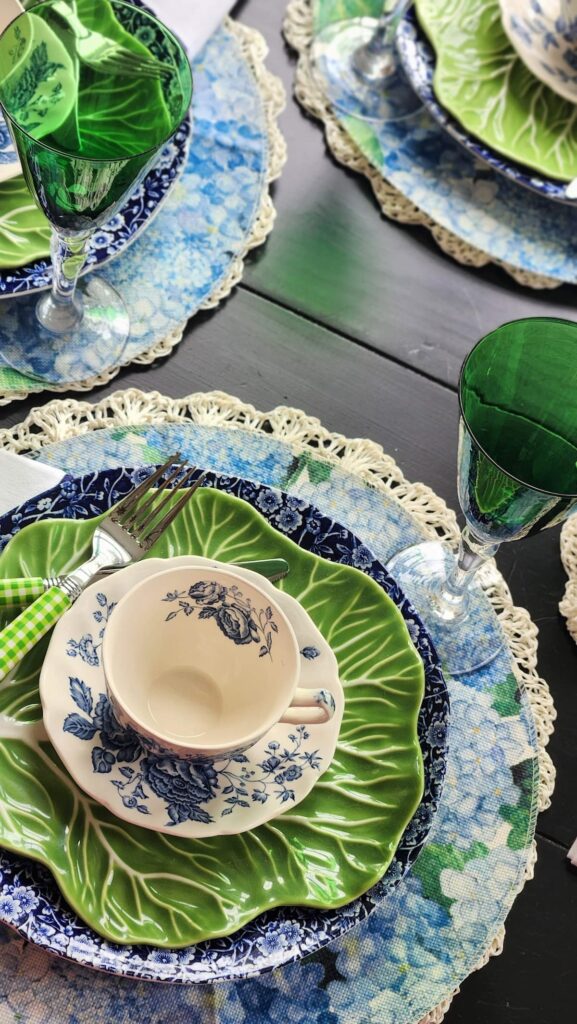
Step 3: Choose your dinner plates.
Pick two or three different patterns that share at least one color from your color scheme. Don’t stress — put them all on the table and step back. You’ll know immediately what works. If it makes you smile, you’re done.
Step 4: Layer your dessert plates or salad plates.
These sit on top of the dinner plate in a layered place setting, which means they can contrast more boldly. This is where a solid color or a more graphic beautiful pattern can really sing. A plain white dessert plate on top of a floral dinner plate is a classic for a reason.
Step 5: Add cloth napkins.
Always cloth napkins — always. Folded simply, tucked into a vintage ring, or laid flat under the fork. Cloth napkins make even the most casual table feel considered and special. They’re also one of the easiest and cheapest things to collect at any local thrift shop.
Step 6: Add glassware and flatware.
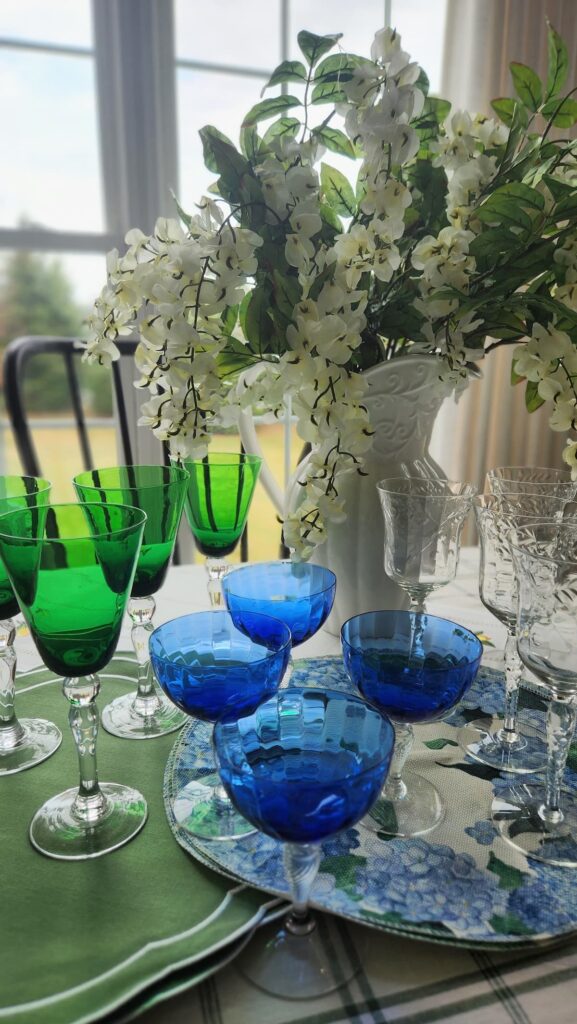
Mismatched glasses? Yes, please. Vintage silverplate mixed with simple stainless? Always a yes. Keep the glassware simple if your plates are busy — and vice versa.
Step 7: Finish with a soft centerpiece.
A few stems from the garden, a candle, a small vase. The dishes are the star — let your centerpiece play a supporting role.
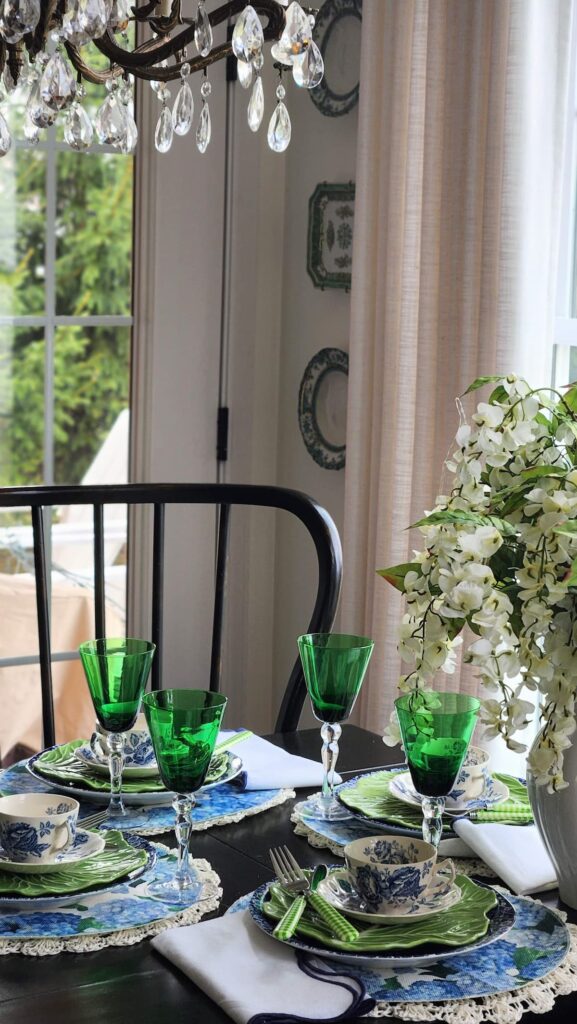
Where to Find Beautiful Mismatched Plates and Dishes
This is honestly one of my favorite things to talk about, because the hunt is half the joy. My mother taught me that in the aisles of Mr. Sanders — and I’ve never stopped hunting since.
- Thrift stores and Goodwill — Go often and go early. The good stuff moves fast, especially vintage china.
- The Salvation Army — Seriously underrated for dishes. I have found some of my most beautiful plates there for almost nothing.
- Your local thrift shop — Smaller independent shops often have more carefully curated pieces than the big chains. Worth a look every single time you pass one.
- Estate sales and antique markets — This is where I find the pieces I truly love most. And if you’re looking to find a specific pattern you’ve fallen in love with, Replacements Ltd is an absolute treasure trove for tracking down vintage and discontinued china. The closest thing to that feeling of wandering into Mr. Sanders all those years ago.
- Facebook Marketplace — Search “vintage china” or “mismatched dishes” and prepare yourself.
- Your own family’s cabinets — Ask around. You would be amazed what’s tucked away waiting to be loved again.
- TJ Maxx and Target — Mixed right in with the vintage finds. White dishes from Target layered under grandmother’s floral china? Perfection.
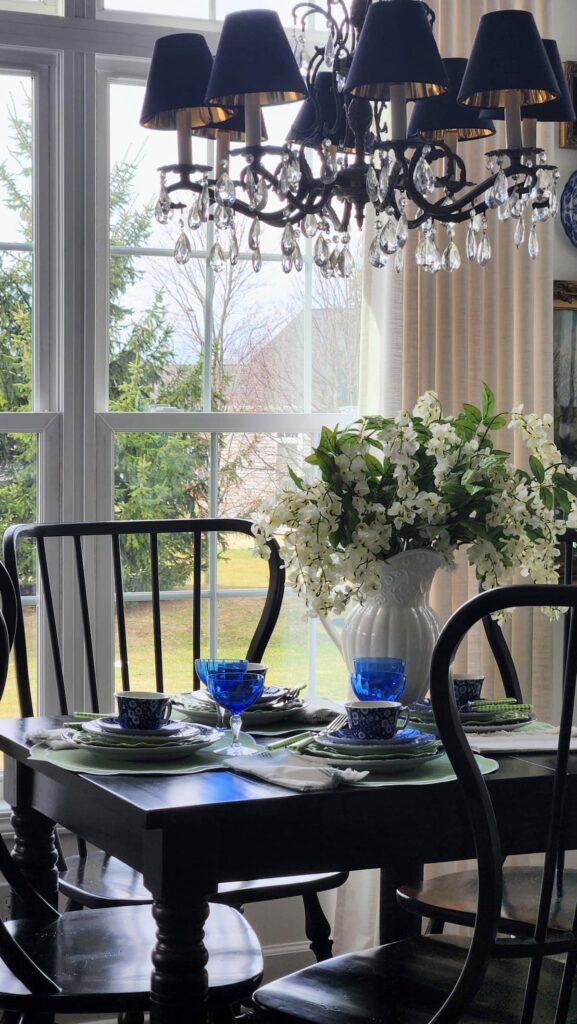
Beyond the Table — Other Ways to Display and Use Mismatched Dishes
What to Do With Mismatched Dishes
- Open kitchen shelves. Stack and layer by color scheme. Mix heights, tuck in little objects between stacks, let your beautiful plates be art every single day.
- A hutch or buffet. This is where your prettiest pieces live on display — not just for company. Treat yourself like you are the company.
- A tea or coffee station. Mismatched mugs (and teacups) are one of life’s great quiet joys. Every morning can feel a little special. (Shop here for several from my personal collection)
- As serving pieces for entertaining. Your guests don’t need matching. They need beautiful. Give them that.
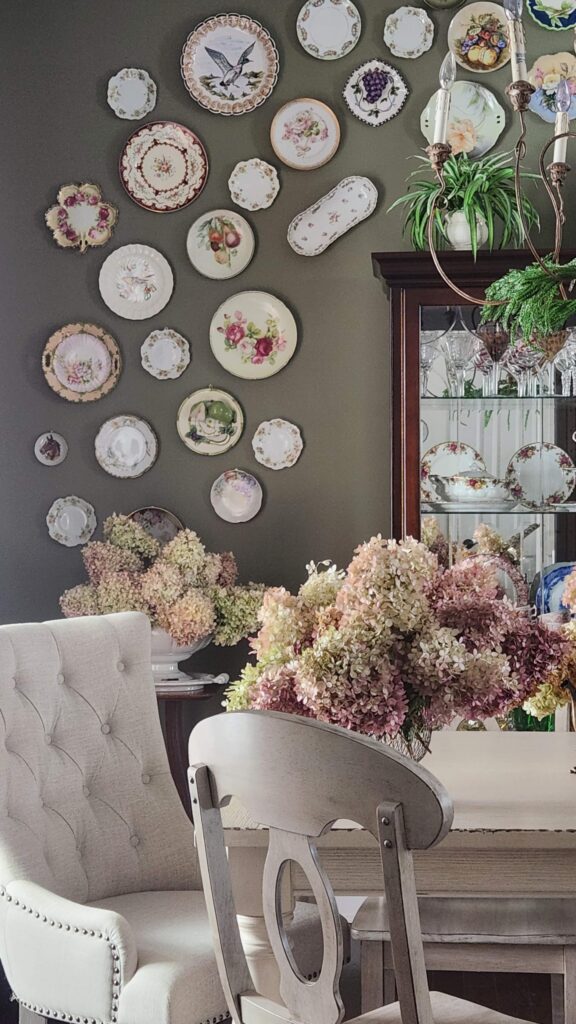
- Vintage plates as wall art. Hung in a loose grouping, a mix of beautiful patterns on a wall is a statement — and a conversation starter every single time.
Shop the Post

The truth is, I’ve never once looked at my collected, layered, and at times mismatched table and wished it to be any other way. What I see is every sale I wandered into, every antique shop I explored with my mother, every piece that caught my eye across a lifetime of looking for beautiful things.
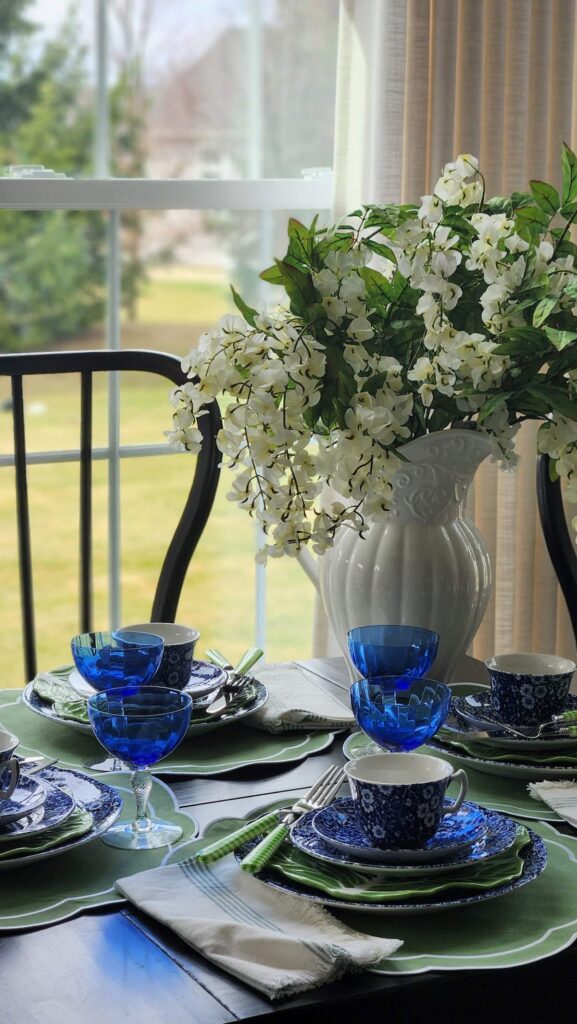
I picture that little girl climbing out of a baby blue Chevy station wagon outside Mr. Sanders, not yet knowing she was learning something that would stay with her forever. She had no idea how many tables those afternoons would eventually set.
Tell me — are you a mismatched dish collector or a committed matcher? Do you have a piece you absolutely love, or a memory attached to how you found it? Drop a comment below, friend. I genuinely want to know!
With love from my collected table to yours,🌿


Don’t Forget to Pin It!
Pin the image below to your boards on Pinterest (just click the Pin button in the top left corner). You can also follow along with me on Pinterest.

Shop My Lowe’s
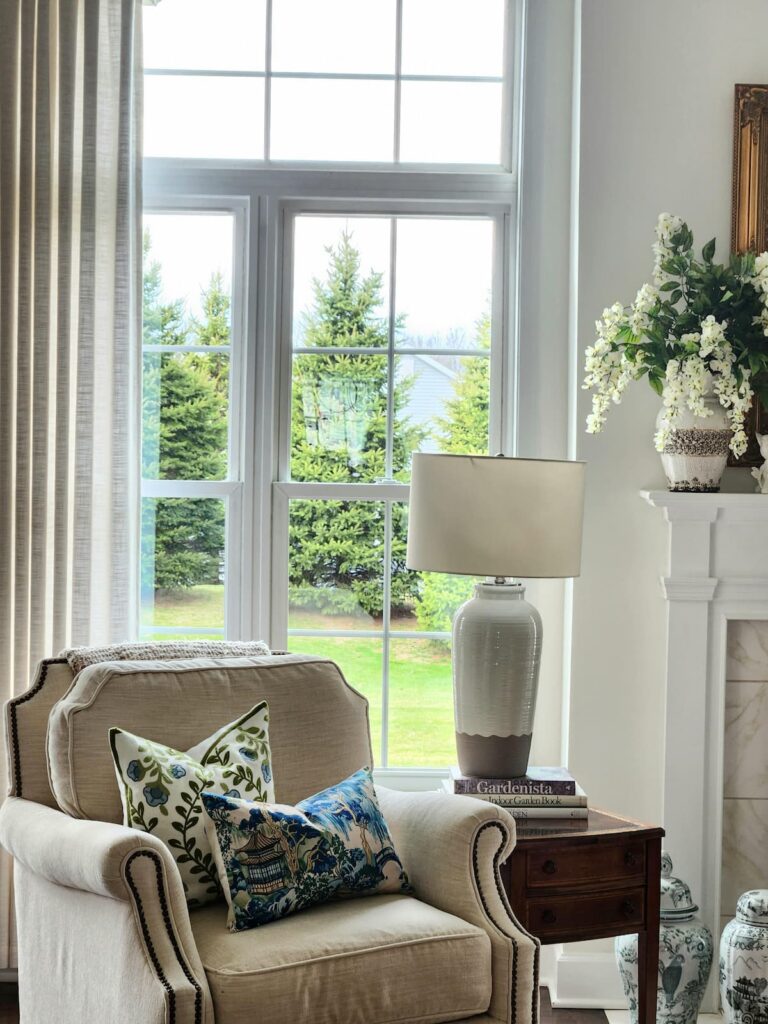
My Lowe’s storefront is a little like my dish collection — a beautiful mix of things I genuinely love. Lighting, garden finds, pillows, faux plants, and more.

Shop My Amazon
You asked, so I gathered it all in one place — home decor, kitchen favorites, cozy finds and a few things I actually wear. Come browse my Amazon storefront. Fair warning — it’s a rabbit hole